
As the e-commerce demand continues to rise within the UAE, companies are required to maximise their last-mile delivery Dubai solutions to ensure that they are able to match the customer demands. However, there are a number of bottlenecks that slow down deliveries, escalate costs and influence customer satisfaction. The key to correcting such challenges is to understand them.
1. Traffic Congestion Slows Urban Deliveries
Traffic jams in Dubai, Abu Dhabi and Sharjah are considered one of the largest challenges of Last Mile Delivery. Access routes and construction areas cause delays to drivers, especially during peak hours. To correct this issue, smart route optimisation tools, real-time GPS tracks, and dynamic scheduling are employed by companies to prevent bottlenecks.
2. Wrong or Incomplete Delivery Addresses
Wrong addresses result in lost deliveries, unnecessary redundancy, and wastage of fuel. Address accuracy is a difficult task in the UAE, where a number of new communities and freehold zones are being developed rapidly. Companies address this through the use of accurate geolocation applications, online mapping, and customer authentication. Some companies request location pins before dispatching orders.
3. High Delivery Volumes During Peak Seasons
The courier networks are usually congested during the holiday season, Ramadan promotion and high sales events. Dealing with large volumes within a limited timeframe is a repetitive issue in Last Mile Delivery. The UAE firms beat this by employing a temporary workforce, automated sorting devices, and micro-fulfilment centres near consumers. More delivery points in Dubai South or Al Quoz are also beneficial to allocate the workload efficiently to avoid delays in times of particularly high shipment demands.
4. Limited Parking and Restricted Access Areas
Delivery routes may be sluggish due to restricted access to the building, security checkpoints and limited parking spaces within the busy UAE neighbourhoods. This is particularly prevalent in Dubai Marina, Business Bay, and central Abu Dhabi. The solution to this is to ensure that companies communicate properly with the building management in advance, deliver with smaller vehicles and establish a scheduled window for delivery.
5. Last-Minute Customer Availability Issues
The lack of customer availability at the delivery time is a regular occurrence, which results in failed deliveries. The effect of this is that it compels the drivers to come back later, consuming more fuel and labour hours. To minimise this bottleneck, UAE companies provide flexible delivery time options, real-time notification of the drivers, and customer communication applications. Some companies enable doorstep drop-offs or secure locker deliveries. These solutions minimise repeated attempts and ensure a smoother, more predictable delivery process for both parties.
6. Inefficient Warehouse-to-Road Handover
Delays are not necessarily initiated on the road; they are also initiated within fulfilment centres. Delivery schedules are influenced by slow sorting, manual scanning and inefficient loading processes. UAE logistic firms are shifting to automated conveyor belts, robots to sort, and operations based on barcodes. Better warehouse organisation ensures drivers receive parcels faster and leave on time.
Conclusion
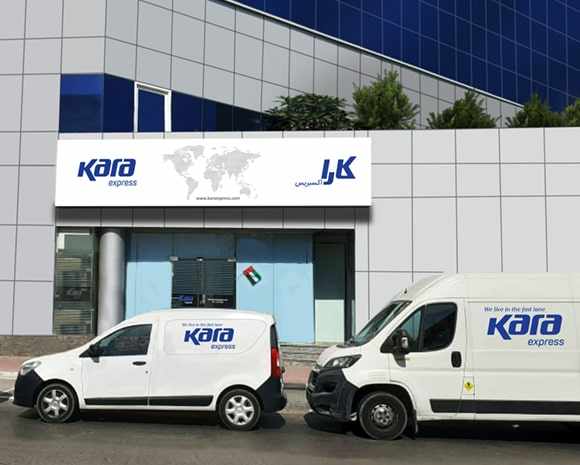
Businesses need to upscale their last-mile delivery solutions in order to stay competitive in the booming e-commerce market in the UAE by ensuring that issues of traffic, inaccuracy, communication, technology, and operational inefficiencies are mitigated. By having smarter systems, collaborating with logistics partners like Kara Express Courier & Cargo and more planning, companies will be able to deliver faster, costs will be reduced, and customer expectations will always be met.
Source url : https://lite.evernote.com/note/3752bb92-d963-87a9-894b-8dcd71678796





Write a comment ...